Air Purification
HEPA-filtered air scrubbers can help manage airborne particles during suitable restoration and mould cleanup work. Filtration is used alongside source control, cleaning and safe handling of affected materials.
View Service Details
A burst pipe, storm leak or overflowing appliance can leave water under carpets and inside walls before the damage is fully visible. Our restoration team helps Werribee property owners assess affected areas, remove standing water and plan suitable drying or cleanup. We use professional extraction and drying equipment based on the conditions found on site.
HEPA-filtered air scrubbers can help manage airborne particles during suitable restoration and mould cleanup work. Filtration is used alongside source control, cleaning and safe handling of affected materials.
View Service DetailsCommercial dehumidifiers and air movers help remove moisture from affected building materials. Moisture readings guide equipment placement and help track drying progress.
View Service DetailsWe assess the source of lingering odours and recommend suitable cleaning, drying or deodorisation methods. Treating the moisture problem is important for lasting results.
View Service DetailsMould remediation may involve isolating the work area, removing affected materials where needed, cleaning suitable surfaces and addressing the moisture source that allowed mould to grow.
View Service DetailsSewage and other contaminated water need careful handling. The work may include controlled extraction, removal of unsalvageable materials, cleaning and disinfection using methods suited to the contamination.
View Service DetailsSuitable floor-drying systems may help remove trapped moisture from some timber and hard-floor assemblies. The right method depends on the flooring type, installation and extent of water exposure.
View Service DetailsPrompt water extraction reduces standing water and helps limit further spread. The equipment used depends on water depth, access and the condition of the affected area.
View Service DetailsWet carpet recovery starts with checking the water source, carpet backing and underlay. Extraction, cleaning and drying may be suitable in some cases, while contaminated or badly damaged materials may need removal.
View Service Details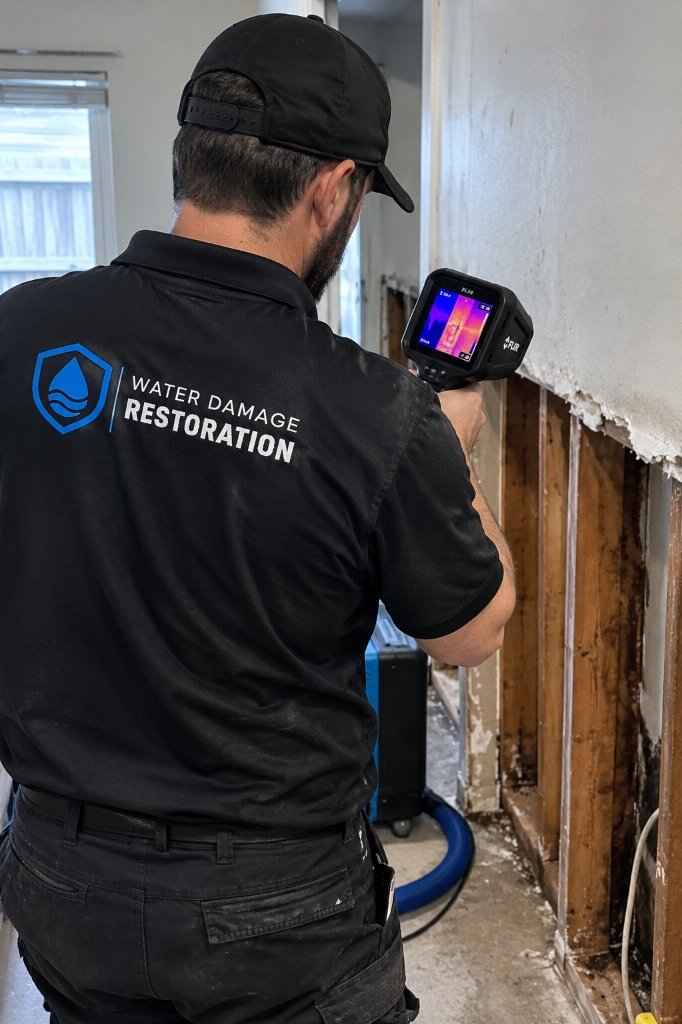
Choosing a water damage restoration company is about more than removing the visible water. You need a clear assessment, suitable drying methods and practical updates about what can be cleaned, dried or may need replacement. We help residential and commercial customers understand the work recommended for their property.
The exact work depends on the water source, affected materials and moisture levels. These are the usual stages considered during a restoration job.
We discuss the incident, inspect accessible affected areas and use suitable moisture checks to help identify where water has travelled. Thermal imaging can support an inspection but does not replace direct moisture measurements.
Where safe and appropriate, standing water is removed with suitable extraction equipment. Contaminated water is handled differently from a clean supply-line leak.
Air movers and dehumidifiers help remove moisture from affected materials. Floor-drying systems may be considered for suitable timber or hard-floor assemblies after assessment.
Cleaning, disinfection, odour treatment or HEPA air filtration may be recommended when the water source and site conditions call for them. These steps do not replace removal of contaminated materials or correction of the moisture source.
Follow-up moisture readings help assess drying progress against suitable material and site targets. We can provide relevant job records and photographs where available.
Water damage can come from plumbing failures, storms or appliance leaks. The source affects the safest way to clean and dry the property.
A split pipe or failed connection can release water into cupboards, hallways, floors and wall cavities.
Stormwater can enter through doors, garages, damaged drainage or low points around the property.
Water from damaged roofing or blocked gutters can stain ceilings and soak insulation or framing.
A failed inlet hose, drain hose or overflowing machine can wet flooring and nearby rooms.
A leaking dishwasher connection or failed seal can leave water beneath cabinets and flooring.
A leaking hot water unit can affect nearby walls, cupboards and floor coverings.
Blocked or overflowing drains can bring contaminated water into bathrooms, laundries or outdoor areas.
Sewage water may contain harmful contaminants and needs appropriate protective measures and cleanup.
Leaks from showers, baths or pipework can travel into the ceiling below and damage plaster or insulation.
Small leaks from appliances, filters or air-conditioning drainage may go unnoticed until swelling, staining or damp smells appear.
Answers to common questions about emergency restoration, drying equipment, flooring, contaminated water and restoration costs.
Tell us what happened, where the water has spread and whether the source has been stopped. We can discuss the next steps and confirm current service availability.
We take emergency restoration enquiries across Werribee and the wider Wyndham area. Call to confirm availability, arrival estimates and the services suited to your property.
Service availability and arrival times depend on your suburb, current workload and the work required. Call before booking to discuss your property.
Learn what to check after a leak or flood, how restoration equipment is used, and which factors affect drying, cleaning and recovery for your Werribee property.
Water can spread farther than the first wet patch suggests. A pipe leak in a Werribee home may soak carpet underlay, run beneath cupboards or travel through gaps around flooring. Stormwater entering a garage or living area can affect skirting boards, plaster and stored belongings. The visible water is only one part of the assessment.
A useful restoration plan starts with the source of the water, how long the materials have been wet, and which rooms or building elements are affected. A clean supply-line leak, outdoor floodwater and a sewage backup have different safety and cleanup requirements.
Need advice about a leak or flooded room? Call 0433 420 900 to describe the issue and check current service availability in Werribee.
Carpet and underlay can hold moisture even when the surface feels less wet. Timber may swell or cup, laminate edges can lift, and plasterboard may soften after prolonged exposure. Water can also collect behind skirting boards, under floating floors or inside cabinetry.
Look for damp smells, discolouration, bubbling paint, swollen trim, lifted flooring or carpet that remains wet near a wall. These signs do not show the full extent of the damage, but they can indicate that further inspection is needed. Avoid pulling apart building materials unless you know it is safe to do so.
The source of the water is important. Water that may contain sewage, chemicals or outdoor contaminants should not be handled like a clean plumbing leak. Keep children and pets away from affected areas until the risks have been assessed.
Water extraction units and pumps: These remove standing water from suitable areas. The type of extractor depends on water depth, access and the surface being treated. Extraction removes free water, but it does not by itself dry every damp material.
Air movers and dehumidifiers: Air movers help moisture evaporate from exposed surfaces, while dehumidifiers collect moisture from the air. Used together, they can support controlled drying when equipment is placed and monitored for the conditions on site.
Moisture meters and thermal imaging: Moisture meters help measure moisture in suitable materials. Thermal cameras show temperature differences that may help locate areas for closer inspection, but they do not directly confirm moisture on their own.
Floor-drying systems: Specialised drying mats or directed air systems may help with some timber and hard-floor assemblies. Whether a floor can be dried in place depends on its construction, installation, water exposure and condition.
HEPA air scrubbers: These filter airborne particles during suitable restoration or mould remediation work. They are one part of the process and do not replace removal of contaminated materials, surface cleaning or fixing the moisture source.
1. Inspect the affected area: Identify the likely source, check accessible surfaces and determine where moisture may have travelled. Electrical hazards, unstable ceilings and contaminated water need special care.
2. Remove standing water: Use suitable extraction methods once the area can be accessed safely. Where the water is contaminated, the work area and handling procedures need to reflect that risk.
3. Plan drying and cleaning: The restoration plan may include air movement, dehumidification, carpet assessment, floor drying, cleaning or removal of materials that cannot be safely restored.
4. Check progress: Follow-up moisture readings help show whether materials are drying toward suitable targets. The equipment and drying period may need to change as conditions change.
Sometimes, but it depends on the water source, the time materials remained wet, the carpet and underlay type, and the condition of the flooring. Clean water exposure caught early may allow some materials to be extracted and dried. Sewage or contaminated floodwater can make porous materials unsuitable for restoration.
Timber and floating floors also vary in how they respond to moisture. Swelling, movement, delamination and moisture trapped beneath the floor all affect the decision. A professional assessment is the best way to understand whether drying, cleaning, repair or replacement may be needed.
Do not put your safety at risk to save belongings. If there is a possible electrical hazard, leave the affected area and contact the appropriate emergency or electrical service.
The price of water damage restoration depends on the amount of water, the type and size of the affected area, the materials involved, contamination risks, access and the drying or cleaning equipment required. A small carpet spill and water that has reached several rooms or wall cavities will not have the same scope of work.
If you are looking to hire a professional water damage restoration specialist near Werribee, ask for a written quote that explains the recommended tasks, equipment hire, monitoring charges and likely exclusions. The best comparison is a clear scope of work, not price alone. Where available, photographs, moisture readings and job notes can help explain what was found and what work was completed.
If you plan to make an insurance claim, contact your insurer early to check your policy requirements. Restoration documentation can support the discussion, but coverage and claim approval remain decisions for the insurer.
Arrange an assessment if water has spread under flooring, entered wall or ceiling cavities, affected multiple rooms, or left a persistent damp smell. Sewage backups and water from outside can create additional health and cleaning risks, so keep clear of the affected area until the right precautions are in place.
For water damage restoration in Werribee, call 0433 420 900. Describe the source of the water, the affected rooms and any immediate safety concerns so the team can discuss suitable next steps and current availability.